BYD has launched a new EV charging platform that, on paper at least, leaves the UK’s current public charging offer some way behind.
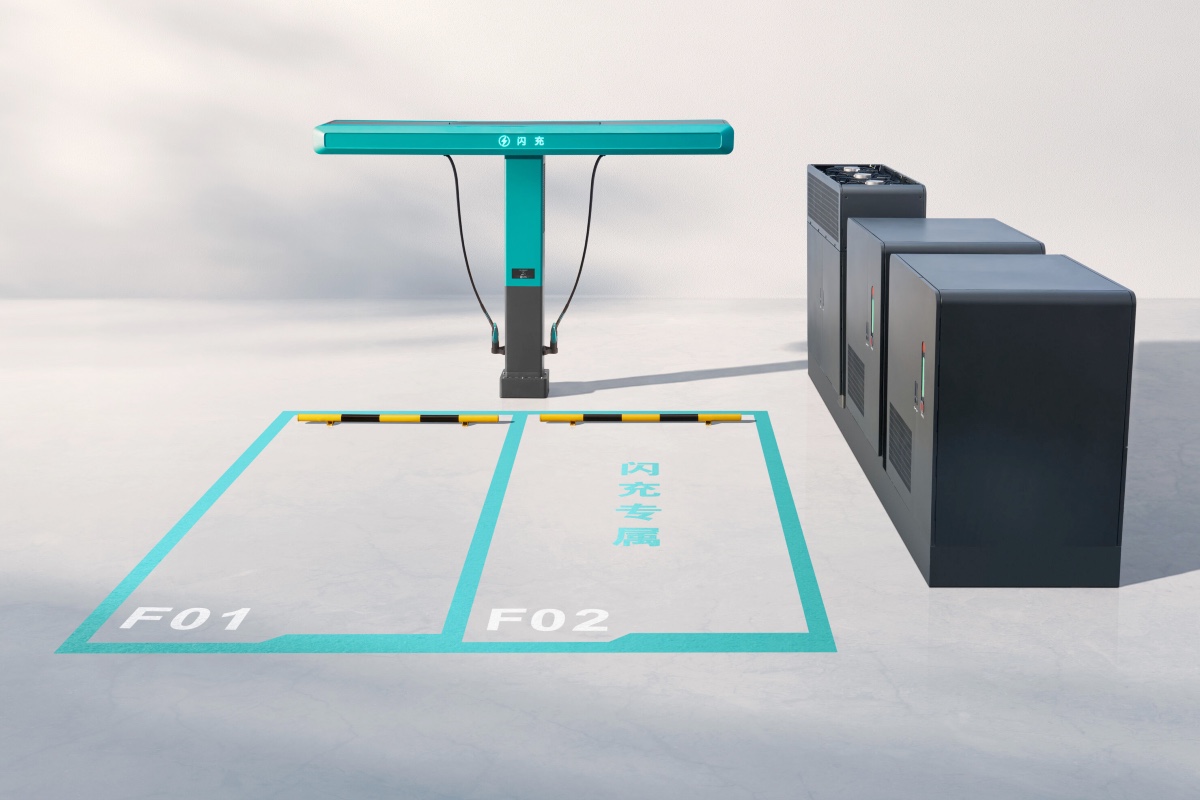
The company’s new FLASH Charging platform is capable of delivering up to 1,500kW through a single connector, according to BYD. The company says that it allows a vehicle to charge from 10% to 70% in as little as five minutes, while a 10% to 97% recharge can be completed in nine minutes. It also claims that, even at -30°C, a 20% to 97% recharge can be completed in 12 minutes.
Those figures are striking. In the UK, the fastest charging most drivers are likely to encounter is around 250kW, maybe 350kW at some sites. If you’re really lucky you might encounter a few 400kW chargers, and even the odd 450kW charger, but there’s certainly nothing in the realm of 1,500kW coming to market in the UK anytime soon.
In other words, BYD’s claimed 1,500kW charging power is not a marginal improvement on what UK drivers can access today. It is several times higher than the top-end public charging power most motorists in Britain would currently recognise. Even against Lotus’ 450kW charger, it is capable of delivering more than three times the amount of peak power.
Now, let’s be clear. That does not mean that drivers will be able to charge faster on BYD’s new 1,500kW charging platform – after all, the charger is only part of the story. In fact, there aren’t any cars on the market that can fully benefit from Lotus’ 450kW charger, with the company’s Emeya and BMW’s iX3 being the fastest charging vehicles currently on sale here, topping out at 400kW.
BYD is hoping to address that problem too, however, with its Flash Battery 2.0 technology set to launch in Europe later this year on the company’s DENZA Z9GT vehicle. It is expected to be able to take full advantage of its FLASH Charging platform.
In terms of when we’ll see 1,500kW EV chargers in the UK, that’s anyone’s guess. So far, BYD says it’s coming to Europe, but hasn’t provided any further detail. Its FLASH charging technology has seen a successful roll-out in China, however, with 4,239 sites across China, and it expects to have 20,000 in operation by the end of this year.
Of course, given the charging speeds and the fact that those installing EV chargers in the UK are already facing an uphill battle when it comes to getting a grid connection, it may not find the environment as easy as it is in China. However, that’s not to say the company hasn’t faced problems there – with it hoping to mitigate any grid issues by pairing the chargers with an ultra-fast-discharge energy storage system. That energy storage system can then be charged at slower speeds, reducing the impact on the grid.