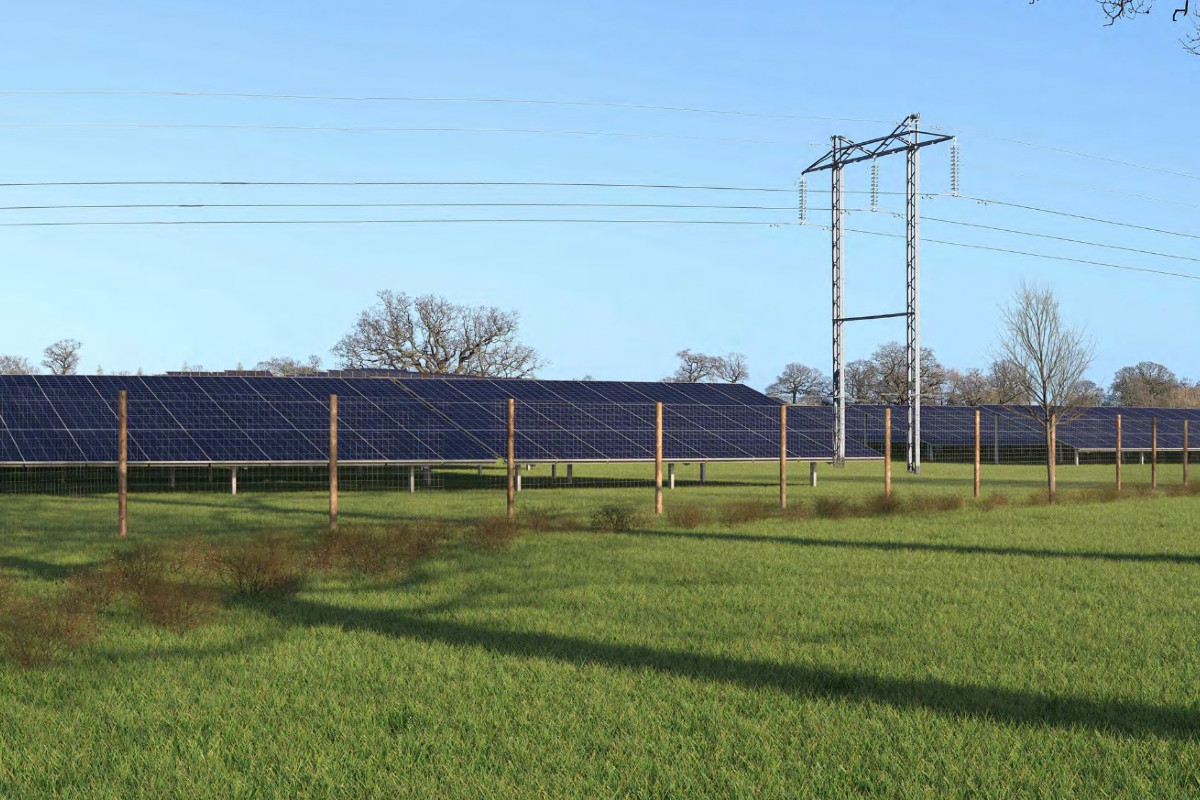
RWE has withdrawn plans for its proposed 99.9 MW Butterfly (Glöyn Byw) solar-plus-storage project in Wrexham, blaming the availability of a grid connection.
The project had been planned across three parcels of agricultural land to the south of Wrexham, with underground cabling expected to connect the site to the Legacy National Grid substation. But while the scheme sat just below the 100 MW mark, it still ran into the same problem now hanging over much of the UK’s clean energy pipeline: getting onto the grid in a timeframe that makes commercial sense.
“After careful consideration and a detailed review of grid connection availability and overall project viability, we have decided not to proceed with plans for the proposed Butterfly/Glöyn Byw solar farm at this time,” the company said in an emailed statement.
RWE had already identified grid access as a potential pain point for the Butterfly project, having assessed alternative connection routes to get the project back on track. Unfortunately, even those back-up plans couldn’t make the project commercially viable at this stage.
That singular decision matters beyond a single Welsh project in Wrexham, however. While some may be able to discount one project being axed due to grid connection delays, the reality is that it’s not an isolated situation. In fact, companies up and down the UK are facing similar constraints – and it could massively impact the UK’s ability to deliver a clean power system.
With the UK having the highest industrial prices amongst the most developed economies, a situation it has faced since 2021, the ability to connect cheap generation and battery storage could actually help bring those prices down. Unfortunately, they’re also being held up by the connections queue – ultimately leading to projects such as OpenAI’s Stargate UK being put on hold.
According to the figures cited by RWE, applications surged by 460% between January and June 2025, while delays in some cases have stretched to as much as 15 years. That is clearly not workable for developers trying to bring forward solar, storage, or co-located schemes on anything resembling an investable timetable.
RWE, for its part, was keen to stress that the decision does not signal any retreat from solar or storage in the UK.
“RWE remains committed to investing in renewable energy in the UK and bringing forward projects that can be delivered efficiently and contribute to both local and national energy needs,” it said.