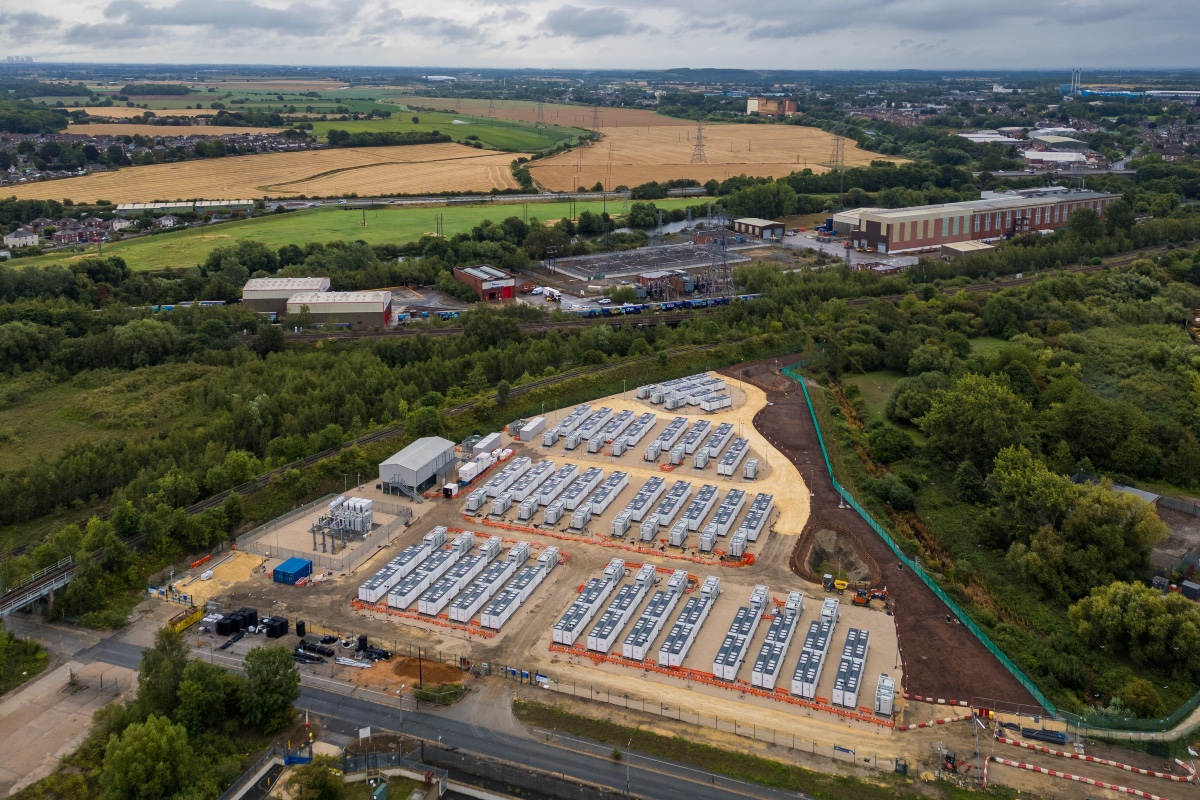
The UK’s National Energy System Operator (NESO) awarded no contracts to battery energy storage systems (BESS) in Stability Market Round 2, after all battery submissions failed at the technical assessment stage, according to analysis from market intelligence firm Modo Energy.
Synchronous condensers and open cycle gas turbines (OCGTs) secured 7.3 GVA of contracts for inertia services, Modo said, aligning with NESO’s own announcement that it awarded five contracts across four providers for the October 2026 to September 2027 delivery period.
The outcome has frustrated parts of the storage sector because it follows Stability Pathfinder Phase 2 – a programme in which NESO awarded contracts worth £323 million overall, including to grid-forming battery projects, to help demonstrate how non-thermal technologies can provide stability services such as inertia.
Modo Energy analyst Zachary Jennings said in a LinkedIn post that some of the batteries that failed in Round 2 are already operational and hold active Stability Pathfinder contracts. He also said that Round 2 introduced additional technical requirements compared with Round 1, including around ‘fixed H constants’, which would require participants to commit to specific, non-variable inertia values for grid-forming technologies during tender and connection phases.
Jennings argued that tightening thresholds can be the right direction of travel, but warned that requirements need to be clearly communicated before developers lock in design parameters.
Reaction to Modo’s analysis on LinkedIn reflected a split in sentiment. Some commenters suggested the Stability Market’s eligibility criteria still favours synchronous or thermal assets over zero-carbon alternatives, while others argued the system operator is being appropriately cautious given how critical inertia procurement is to maintaining a stable grid.
NESO has positioned the Stability Market as its enduring, long-term mechanism for procuring stability services, in contrast to the Pathfinder approach, which has been used to test and validate newer solutions. With Round 2 now concluded, the immediate question for developers is whether future rounds will provide clearer guidance on the technical thresholds grid-forming batteries must meet – and whether the market framework will evolve quickly enough to reflect what the technology can deliver in practice.