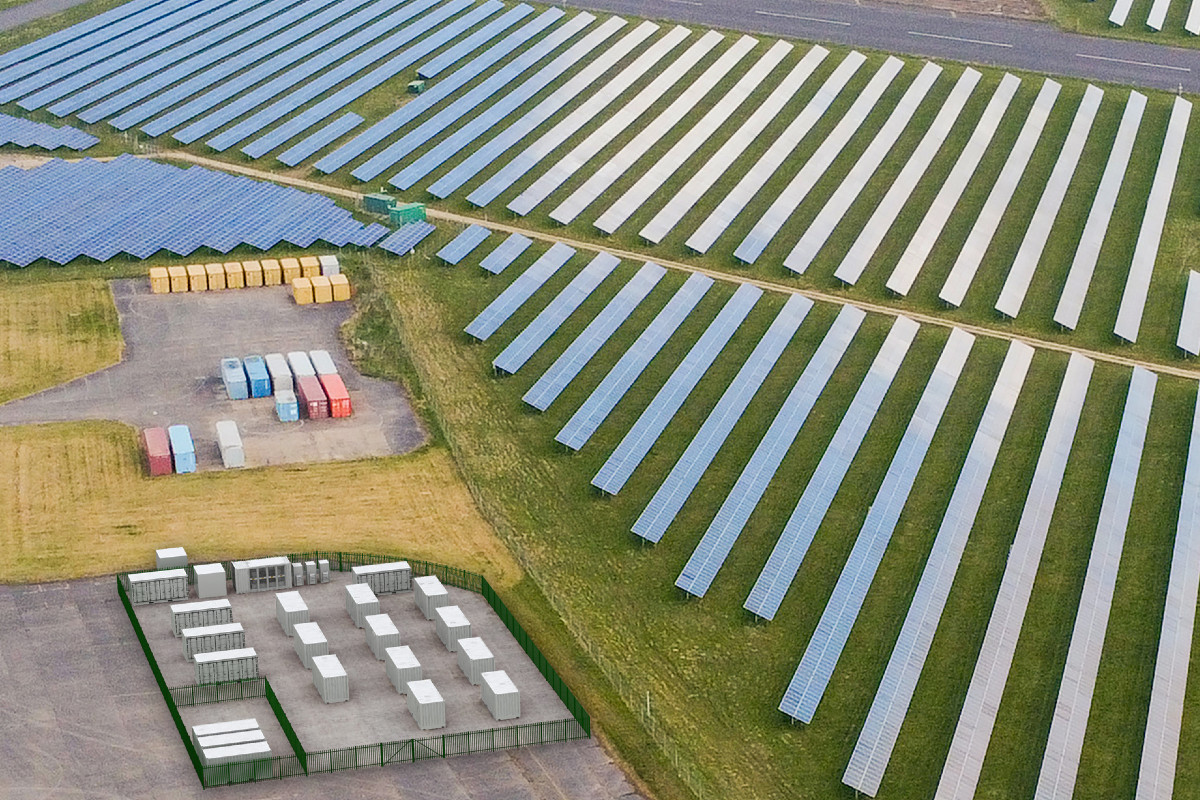
Connected Energy is developing what it describes as the ‘UK’s most advanced second-life EV battery testing facility’.
The project will be built at Scottow Enterprise Park, close to the company’s technical centre, after Connected Energy secured planning permission from North Norfolk District Council. Construction is now moving forward, with the site expected to be operational by mid-2026.
Alongside the test facility, the development will host Connected Energy’s first wholly-owned and operated second-life BESS site, comprising a 5 MWh system. The company says the site will be used to test and integrate batteries from multiple electric bus and truck manufacturers, while also operating as a grid-connected asset that trades energy and provides grid services.
“This development marks the next step in Connected Energy’s growth. Having successfully shown how second-life BESS can work on a commercial scale, we are now moving to owning and operating grid-scale storage sites, with our first site also functioning as an advanced test facility,” commented Matthew Lumsden, CEO at Connected Energy.
Connected Energy said the aim is to demonstrate the commercial case for reusing EV batteries in stationary storage once they are no longer suitable for electric vehicles. The company argues that redeploying batteries into grid-scale systems can extend their working life, support renewable generation, and create additional revenue streams before the batteries move into recycling.
The development is a £2 million project supported by the Advanced Propulsion Centre UK (APC), as part of a wider effort to improve EV battery reuse and recycling.
From demonstrations to owned assets
Second-life battery storage has long been held up as a route to get more value from EV batteries, particularly as heavy-duty vehicles begin to add to the volume of packs coming out of service. The challenge has been moving from individual demonstrations to repeatable deployments that work across different battery types and duty histories.
Connected Energy’s Scottow site is positioned as a step in that direction. By testing and integrating batteries from multiple manufacturers and then operating the resulting storage system in the market, the company says it will be able to build a clearer picture of performance, reliability and revenue potential.
The 5 MWh BESS at Scottow will be used to provide ‘hard evidence’ of what repurposed batteries can deliver in real grid service, rather than purely in laboratory or pilot conditions. While the company has previously delivered second-life systems for other organisations, this is framed as its first project that it will both own and operate itself.
Connected Energy says it will use the operational data from Scottow to refine how second-life batteries are configured and managed, with a view to larger deployments as more EV batteries reach end of life.
“Insights from this multi-battery 5MWh project will shape future, larger deployments,” added Matthew.
“Our goal is to optimise what can be achieved with second-life batteries. We will gather extensive data to support a scalable commercial model for large-scale sites as more second-life batteries become available.”
Why second life is back in focus
The logic behind second-life storage is straightforward: EV batteries can still retain significant usable capacity even when they are no longer ideal for vehicle performance requirements. For grid and behind-the-meter storage, where the power and energy demands are different, those batteries can potentially provide useful service for several more years.
In theory, that extension could ease pressure on raw material demand, improve lifecycle emissions, and help make EV batteries more cost effective by extracting additional value. In practice, second-life projects have to overcome technical and commercial barriers, including inconsistent battery condition, differing form factors, and the cost and complexity of testing, integration and ongoing management.
Connected Energy’s approach at Scottow is to make the testing and integration capability a core part of a working grid-scale site. If successful, it could provide a model for how second-life systems are engineered and validated as the UK’s EV fleet, and its associated battery supply chain, continues to mature.
The company says the Scottow hub will focus on batteries from electric buses and trucks, which are expected to become a significant source of packs as fleet electrification accelerates. Heavy-duty batteries are also likely to have different usage profiles from passenger vehicles, making robust testing and integration processes particularly important if they are to be repurposed at scale.