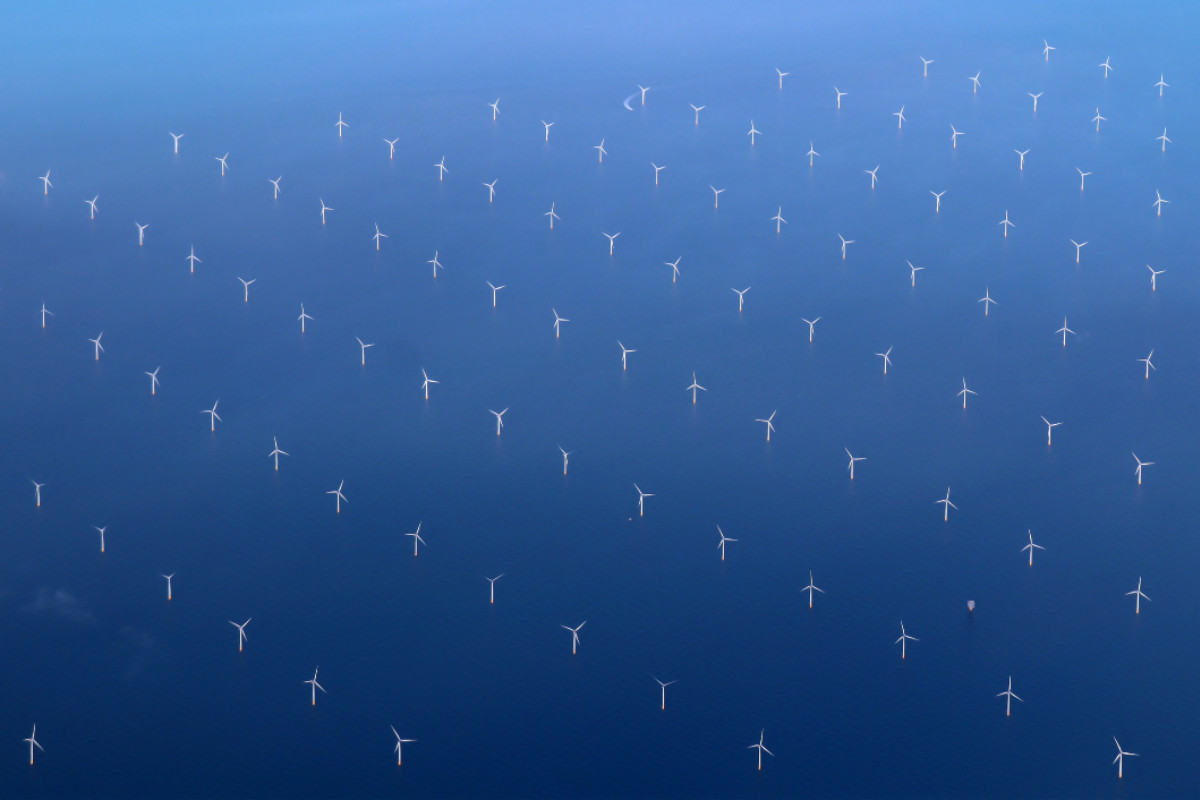
The UK has secured 8.4GW of offshore wind capacity in its latest Contracts for Difference (CfD) auction, in what ministers are describing as the largest single procurement of offshore wind in British and European history.
The auction, Allocation Round 7 (AR7), follows a turbulent couple of years for the offshore wind pipeline. The previous Government’s AR5 failed to secure a single offshore wind project, while AR6 saw capacity return after budgets were increased and strike prices lifted to reflect higher costs across the supply chain.
This time, the Department for Energy Security and Net Zero says AR7 has landed enough new offshore wind capacity to generate the equivalent of electricity for more than 12 million homes, putting the country ‘firmly on track’ for its clean power by 2030 ambition.
While ministers have leaned heavily into the energy security message – and the desire to reduce exposure to global gas markets – the more immediate political argument is around cost. Government analysis published alongside the results claims offshore wind is now materially cheaper than the alternative of building and running a new gas-fired power station, based on levelised cost of electricity (LCOE) comparisons.
Using those figures, the cost of building and operating a new gas plant is put at £147/MWh, compared with an average of £90.91/MWh for fixed-bottom offshore wind secured in AR7 (or £65.25/MWh in 2012 prices), which the Government describes as 40% cheaper than new gas.
It also points to research suggesting renewables reduced wholesale electricity prices by up to a quarter in 2024 – around £25/MWh – arguing that the more renewables the UK builds, the more frequently they will set the wholesale price rather than gas.
There has been criticism from some that the higher strike price of £90.91/MWh is too high, considering the contracts were also extended for 20 years. Some argue that it locks consumers into higher energy prices for the next two decades. Others contend that without the higher price, developers would be less likely to invest in offshore wind – something we saw from the cancellation of the Hornsea 4 offshore wind farm, which had a lower strike price of £82/MWh across a 15 year contract.
The Government is keen to frame it as cheaper than the alternative, however, especially given the higher costs associated with nuclear and gas power plants – not to mention the lack of energy security that fossil fuels provide.
Which projects secured contracts?
So, which projects actually secured contracts under AR7? Well, they are spread out across the UK, with winning projects in England, Scotland and Wales. That includes:
- Dogger Bank South (off the coast of Yorkshire) and Norfolk Vanguard (off East Anglia), described as among the world’s largest offshore wind farms
- Berwick Bank in the North Sea, billed as the first new Scottish project since 2022 and the largest planned offshore wind project in the world
- Awel Y Môr, described as the first Welsh project to win a contract in more than a decade
The Government also said the round represents progress on floating offshore wind, with projects including Erebus in the Celtic Sea and Pentland in Scotland. Those projects had a much higher strike price of £216.46/MWh, however, which reflects the earlier stage of the technology.
Ed Miliband, the UK’s Energy Secretary framed the results as an energy security and cost-of-living play, “With these results, Britain is taking back control of our energy sovereignty. This is a historic win for those who want Britain to stand on our own two feet, controlling our own energy rather than depending on markets controlled by petrostates and dictators.
“It is a monumental step towards clean power by 2030 and the price secured in this auction is 40% lower than the alternative cost of building and operating a new gas plant.
“Clean, homegrown, power is the right choice for this country to bring down bills for good and this auction will create thousands of jobs throughout Britain.”
Chris Stark, Head of Mission Control, also pointed to the scale of the capacity secured, “This is a stonking result for delivering on our mission for clean power by 2030. Amid global headwinds and pressures facing the offshore wind sector in recent years, we’ve secured a record amount of capacity at a competitive price for the consumer.
“We need more offshore wind to meet the increasing demand for electricity in the years ahead, this result powers us towards a future of clean, secure, energy abundance and less reliance on foreign imports.”
Neil McDermott, CEO at the Low Carbon Contracts Company (LCCC), which manages CfD contracts, said the round demonstrated the mechanism’s ability to provide investor certainty, “The results from this allocation round are a prime example of the Contracts for Difference mechanism’s greatest strengths, providing certainty for investors and supporting British jobs across the country.
“At LCCC, we’re proud of our role in managing these contracts, adding to our existing operational portfolio of more than 10 GW with an additional 25 GW in the pipeline, and providing stewardship of these projects for the next two decades.”
Industry reaction
Susie Elks, Senior Policy Advisor at independent climate change think tank E3G, commented, “Today’s auction has unlocked an unprecedented amount of renewable energy for the UK. It’s a crucial step to securing a British-owned energy supply which cannot be disrupted by international events. The secured price will lower bills for families up and down the country. It’s clear that renewable technology can provide clean, affordable and plentiful energy for all of us. Now the government must work to ensure ordinary people feel the benefits in their everyday lives”
Sam Hollister, Head of UK Market Strategy at LCP Delta, added, “Today’s long-awaited CfD AR7 announcement is a seismic moment in the Government’s pursuit of clean power. The government has taken the unexpected decision to double its original budget and go all out in the race for offshore wind. It has certainly put itself back in the driving seat to meet the UK’s Clean Power 2030 target.
“With around 8.5GW of offshore wind projects contracts signed, AR7 becomes a record-breaking auction and provides a clear boost to investors in Great Britain that the government is set on its Clean Power Mission in spite of the challenges with deliverability, supply chain pressures and consumer costs.
“The government has taken the option to increase its original budget and procure almost twice as much offshore wind power on behalf of customers than originally expected. By providing developers with 20-year contracts, DESNZ ensures stable investor returns, clear development pipelines, while reducing customer exposure to gas price volatility and supply shocks.”
Ana Musat, Executive Director of Policy and Engagement at RenewableUK, concluded, “This is a great result for Britain’s energy security and for hard-pressed billpayers, because these new offshore wind farms will generate the power we need at a lower cost than new gas or nuclear plants, and at a stable and predictable price.
“The UK has made the right decision to roll out renewables at speed and at scale, giving our country greater energy security and protecting consumers against volatile global gas prices which caused the last energy crisis. Homegrown power is the best defence against geopolitical volatility, and this auction is a significant step forward towards energy independence.
“Investment in renewables is also crucial to keep pace with the UK’s need for more energy. Electricity demand is set to increase significantly in the years ahead as existing nuclear and gas capacity retires, so the 8.4 GW awarded contracts today will be crucial for economic growth.
“Growing the offshore wind sector’s supply chain is a critical part of the Government’s Industrial Strategy, and rightly so. Our analysis shows that maximising investment in high-value parts of the UK’s offshore wind supply chain could deliver an extra £25 billion to our economy over the next decade, building on the 150 factories and hundreds of businesses we have around the country which are already benefitting from contracts to build and manage our world-class offshore wind farms.”