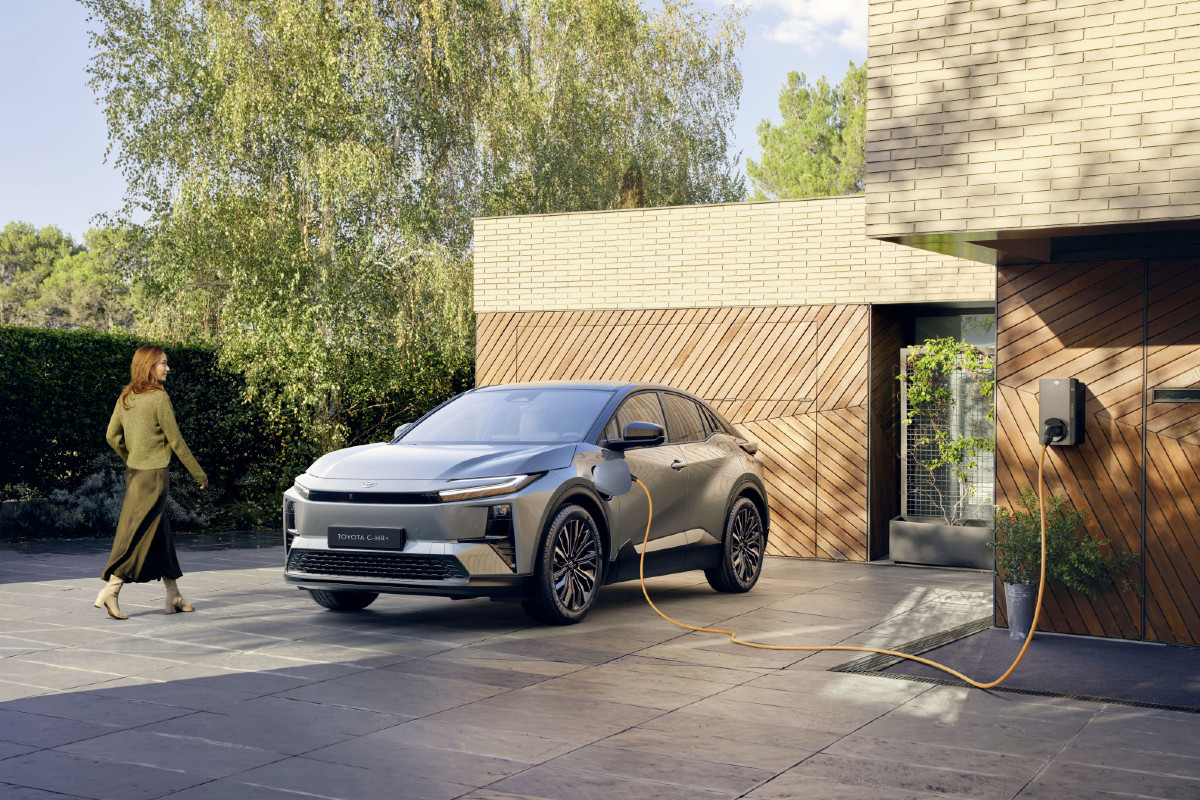
Toyota Motor Europe, the European arm of the Japanese car giant, has outlined plans to build a new EV charging ecosystem across Europe, centred on smart energy services for battery electric and plug-in hybrid electric models.
The programme will initially focus on Demand Side Response (DSR) solutions in the UK and Germany, with the UK-side of the service being launched in collaboration with British Gas.
• United Kingdom, in collaboration with British Gas
• Germany, in collaboration with The Mobility House Energy
These services are designed to give Toyota and Lexus drivers a more seamless charging experience at home, at work and on the road, while also helping to support grid stability and the integration of more renewable generation.
From 2026, participating customers in the UK and Germany will be able to access DSR-enabled smart charging features that:
- Lower energy bills by automatically shifting charging to off-peak periods when electricity is cheaper
- Offer enhanced convenience through intelligent scheduling and remote control via mobile apps
- Increase access to renewable energy by charging when green power is most available
- Provide incentives and rewards for taking part in grid-balancing programmes
While the immediate benefit is to the driver through reduced costs and greater convenience, Toyota notes that these services are also intended to support wider grid sustainability. By shifting demand, DSR can ease pressure on the system at peak times, reduce reliance on fossil-fuelled peaking plants, enable greater use of intermittent wind and solar, and limit the need for costly grid reinforcement.
A move towards vehicle-to-grid
TME’s partnerships with European energy providers are expected to expand beyond the UK and Germany to additional countries, with further services added over time. A key element of the roadmap is Vehicle-to-Grid (V2G) integration, which would allow compatible EVs not just to draw power from the grid, but also to discharge energy back when needed.
Turning vehicles into mobile energy assets has been widely seen as a way to unlock new value streams for customers while providing flexible capacity to the electricity system. Toyota’s plans suggest it intends to position future BEV and PHEV models to participate in those services as they mature.
Leon Van Der Merwe, VP Circular Economy and Energy Business at Toyota Motor Europe, framed the initiative as part of the company’s broader transition. He noted, “This initiative is a key milestone in Toyota’s broader electrification strategy and supports its ambition to contribute to a more sustainable society. By enabling smart, flexible, and green charging, Toyota is helping to shape a future where mobility and energy work hand in hand for the benefit of customers, communities, and the planet.”
If the pilots prove successful and V2G follows, TME’s EV charging ecosystem could become a significant tool in aligning its electrification strategy with Europe’s wider grid decarbonisation and flexibility needs. It’s also a surprising departure for a firm that has long held that hydrogen was the future of mobility, rather than battery electric vehicles.