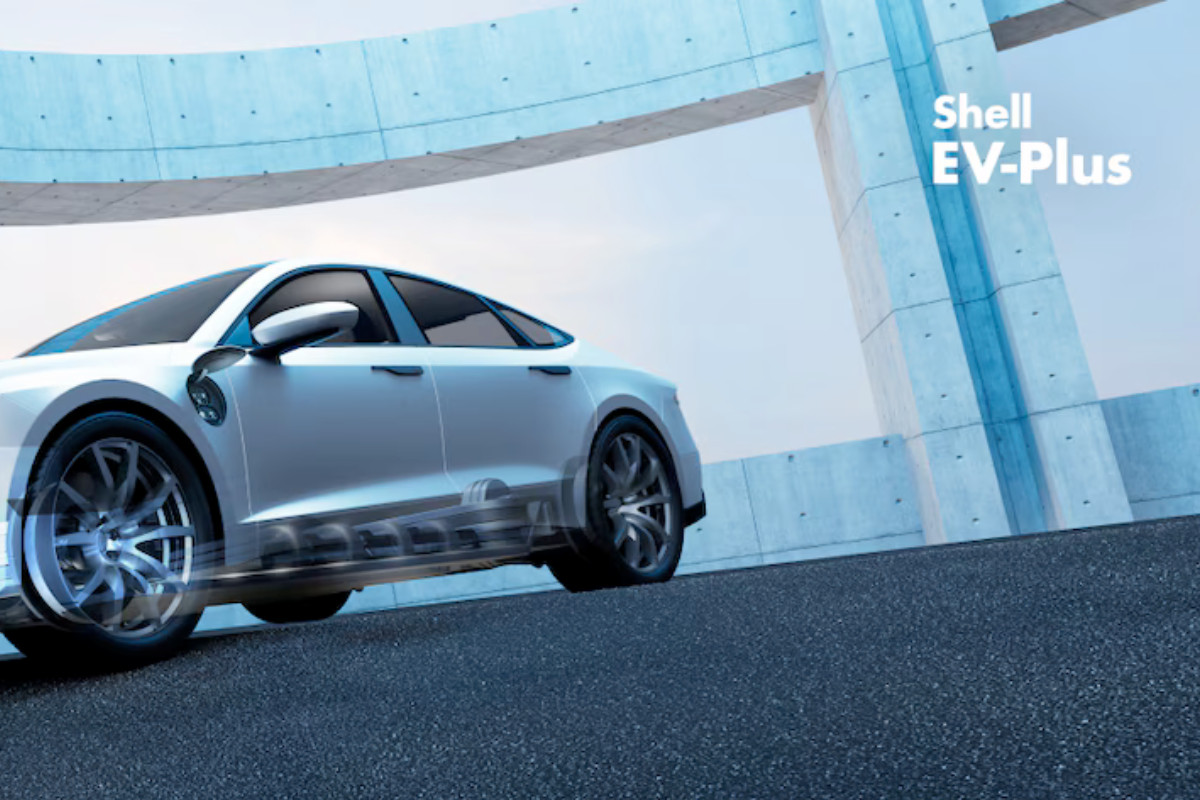
Shell Lubricants has demonstrated an EV thermal management fluid that it says can sharply cut charging times – even while using existing charging infrastructure.
By collaborating with UK engineering firm RML Group, Shell Lubricants has produced a new 34 kWh battery pack that is reported to have charged from 10% to 80% in under 10 minutes.
Shell says the EV-Plus Thermal Fluid, based on its Gas-to-Liquid (GTL) technology, reduces thermal stresses sufficiently to tolerate much higher cell charging currents while maintaining safety, thermal stability and cycle life.
In a lightweight, aerodynamic car achieving 10 km/kWh, the company calculates a replenishment rate of 24 km per minute spent charging – versus roughly 5 km per minute in many current battery electric vehicles – using the existing public charging network.
How the technology works
EV-Plus Thermal Fluids are electrically non-conductive and used in single-phase immersion cooling. By filling the interstitial spaces within the pack, the fluid maximises direct contact with each cell to boost heat transfer, accommodate the heat generated during rapid charging and keep temperatures consistent across the pack. Shell and RML say the approach enables more compact pack designs with fewer components and lower mass.
“As we celebrate World EV Day, we are thrilled to demonstrate that Shell EV-Plus Thermal Fluids can help to significantly improve battery thermal performance, paving the way towards higher charging efficiencies, enhanced safety, convenience and cost-effectiveness— to support the widespread adoption of BEVs demanded by legislative initiatives around the world,” said Jason Wong, Global Executive Vice President, Shell Lubricants.
“This evolution is a testament to our commitment to collaborative innovation towards enabling more value with less emissions – building on our experience in high-performance transformer oils, proprietary Gas-to-Liquid (GTL) technology, and single-phase immersion cooling fluids for data centres.”
Shell isn’t the only company targeting faster charging rates for electric vehicles, however. BYD earlier this year unveiled their ‘Super e-Platform’, which promises a charging speed to match the speed of fuelling a combustion vehicle. While that platform relies on purpose build hardware, including cells designed for ultra-fast charge (to avoid lithium plating), a ~1,000 V architecture, contactors/busbars/cabling and connectors rated for kA currents, a BMS that permits those charging rates, and a chiller/radiator loop sized to dump tens of kilowatts of heat during the peak – Shell’s approach is much simpler.
Robert Mainwaring, Shell’s lead engineer on the project, commented, “Consumers are in pursuit of better energy efficiency, longer driving range and faster charging. Our ambition within this project was to show how Shell EV-Plus Thermal Fluids can support significant reductions in charging time without compromising cell integrity and lifetime.
“By embracing advanced thermal management solutions, we believe this will open the door to a new generation of more sustainable, efficient and cost-effective battery electric vehicle solutions.”
Of course, Shell’s sub-10-minute result was achieved on a relatively small 34 kWh pack; scaling the approach to larger capacities common in mass-market electric vehicles will be the next test, alongside integration into commercial vehicle platforms and validation with charge-point operators. Shell has not disclosed a commercial timeline, but the demonstration underlines growing interest in immersion-cooled packs as the industry seeks faster charging without trading off safety or longevity.