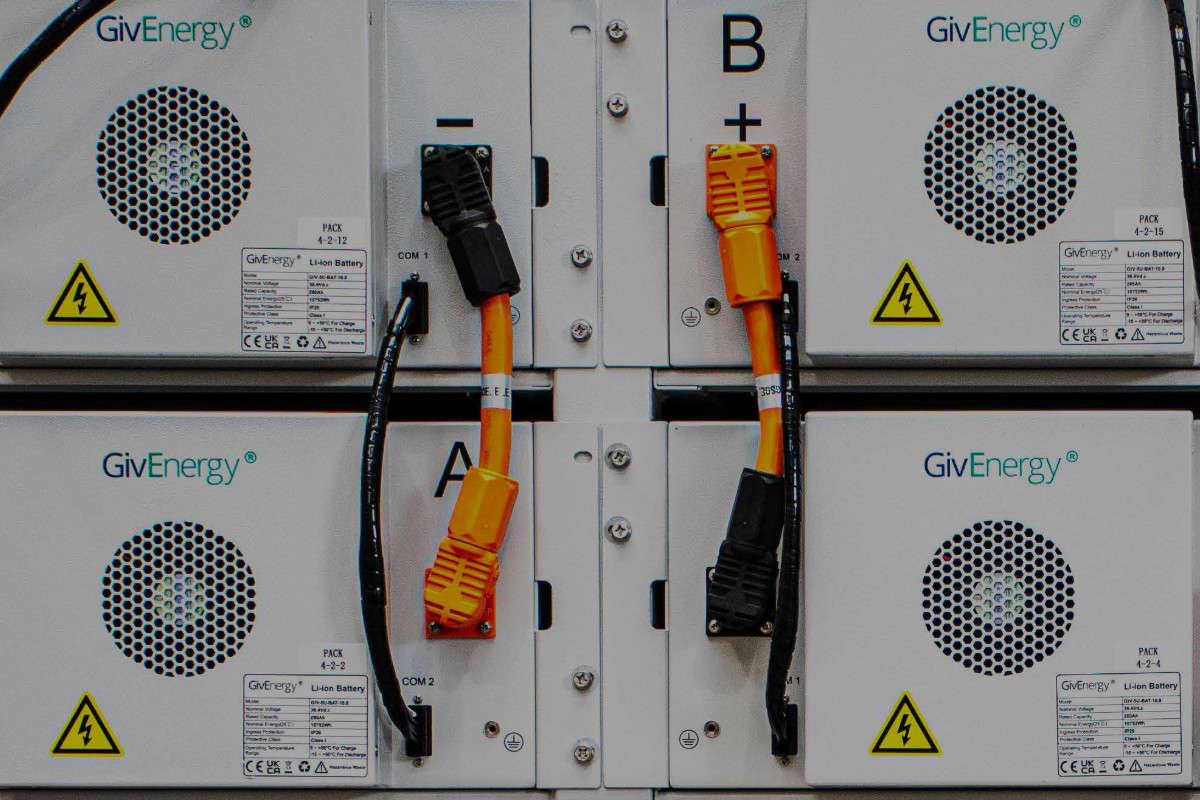
GivEnergy Ltd has filed a notice of intention to appoint administrators, marking the first formal step in a potential administration process and raising uncertainty for installers, wholesalers, and customers across the UK battery storage sector.
The filing, made with the Insolvency and Companies List, is a preliminary step under UK insolvency law. It typically triggers a short moratorium of up to 10 business days, protecting the company from creditor enforcement while administrators are lined up or other options, including a restructuring or sale, are explored.
No administrator has been formally appointed at this stage, and there has been no published statement of affairs or confirmed outcome for creditors, employees, or ongoing trading entities. Even so, the move is likely to create immediate concern across GivEnergy’s supply chain, particularly given the company’s position in both residential and commercial battery storage.
The development comes just a week after GivEnergy told customers it would introduce a ‘single monthly fee’ covering ‘remote access, historical data, automation, and API usage (including 3rd party remote access’.
That was mostly aimed at consumers who bought the company’s residential batteries, but the company also played a major role in the commercial energy storage market too. Its commercial line-up included everything from single rack batteries to entire containerised solutions.
Given its role in both markets, many of the company’s customers will be wondering what impact the administration proceedings will have on them. After all, what now happens to warranties, technical support, firmware updates, spare parts, and platform access if GivEnergy ultimately enters administration?
Midsummer Energy, one of the UK’s largest wholesalers and one of GivEnergy’s distribution partners, has already responded publicly. In a statement, the company said, “We wish to inform our customers and partners that GivEnergy Ltd has filed a Notice of Intention to Appoint an Administrator, a formal step in the UK insolvency process that typically precedes entry into administration. This development means we have serious doubts that GivEnergy will be able to continue honouring warranties or providing ongoing technical support, firmware updates, or spare parts for their products. As a result, we have de-listed GivEnergy products from our portfolio with immediate effect.”
That is a significant development in its own right. Once a major distributor begins publicly warning over warranty and support risk, the issue stops being a purely legal or financial story and becomes an operational one for the wider market.
Installers could now find themselves exposed on multiple fronts. There may be questions over order fulfilment, live project delivery, replacement parts, and aftersales support, while existing customers may be left wondering whether long-term product warranties will still carry any practical value. For commercial projects in particular, that uncertainty could prove especially awkward where battery systems are tied into broader site energy strategies, monitoring platforms, or contractual performance expectations.
A wider market trend?
The wider green energy market has been seeing somewhat of a trend of companies that are struggling to stay above water. Late last year, Petalite, a UK-based manufacturer of EV charging solutions, also entered administration after losing a major investor. Likewise, battery manufacturer Britishvolt entered administration back in 2023, which occurred after a string of high-profile announcements surrounding plans to build gigafactories in the UK.
There have also been signs that the market is consolidating. Connected Kerb recently acquired assets from Trojan Energy after the latter company entered administration.
But despite signs of troubled waters, many will be looking at the potential failure of GivEnergy from a wider viewpoint. That’s because it’s not necessarily the loss of the hardware that will be the big issue going forward, but the ongoing support of the software.
Many battery storage systems now promise remote monitoring, which relies on cloud servers. That means that if the battery company ultimately goes under, those cloud servers could go offline, meaning no more monitoring for the company’s customers. That is already prompting questions across the market about how resilient these platforms really are if a supplier runs into trouble.
There’s also the bigger question of how GivEnergy, a major player in the UK’s energy storage market, had found itself in this position in the first place. No doubt, all will come to light in the coming months.