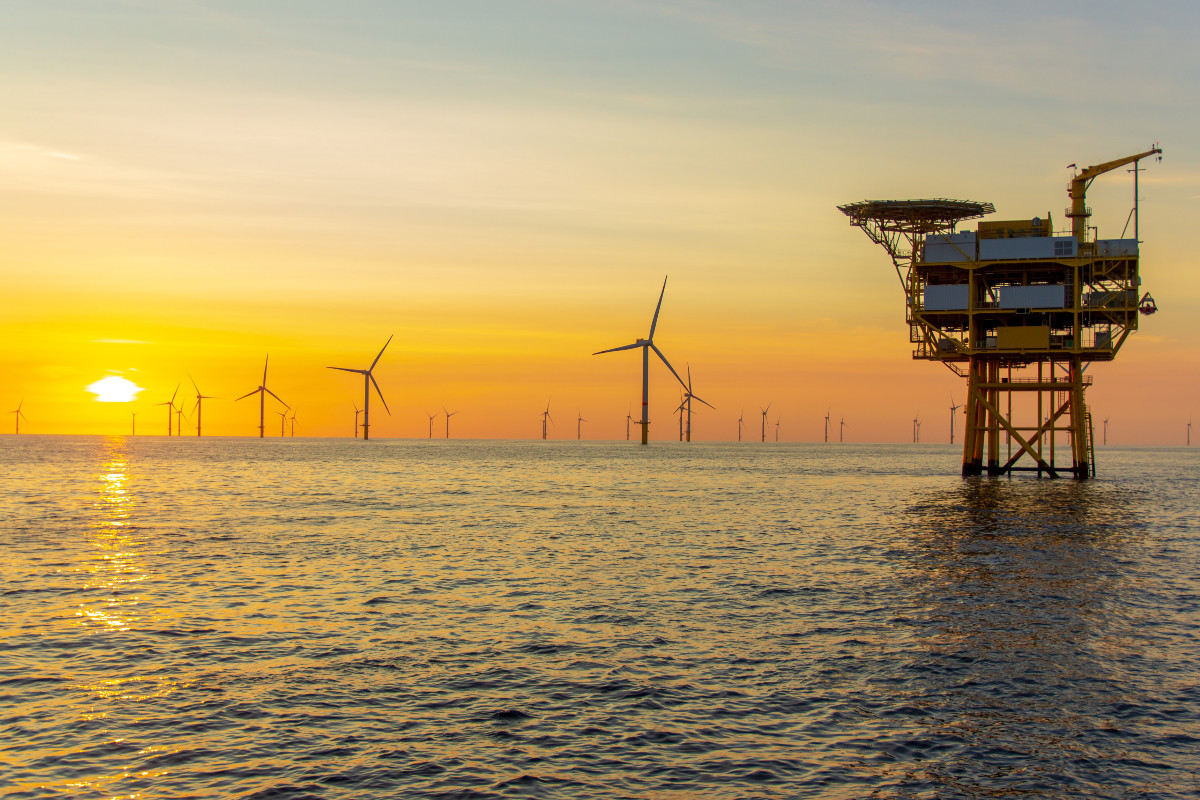
The UK and nine European partners have agreed to develop 100 GW of offshore wind through joint projects in the North Sea by 2050.
Energy Secretary Ed Miliband signed the agreement, known as the Hamburg Declaration, at the Future of the North Seas Summit in Hamburg on January 26. The signatories are the UK, Belgium, Denmark, France, Germany, Iceland, Ireland, Luxembourg, the Netherlands and Norway.
The commitment is being positioned as a shift from ambition to delivery: North Sea countries previously pledged to reach 300 GW of offshore wind by 2050, but the Hamburg Declaration is intended to lock in a specific share of that target through joint, cross-border projects – not just national buildouts stitched together later.
Estimates suggest that 100 GW of offshore wind capacity is equivalent to powering up to 143 million homes, more than the UK needs at any one time. In fact, the grid typically needs between 30-45 GW, meaning there’s plenty of energy from the joint wind farm to share.
Of course, the exact output from the North Sea wind projects will ultimately depend on capacity factors, grid constraints and how quickly interconnectors are delivered. So we shouldn’t always believe the headline figure.
Commenting on the new agreement, Energy Secretary, Ed Miliband, said, “We are standing up for our national interest by driving for clean energy, which can get the UK off the fossil fuel rollercoaster and give us energy sovereignty and abundance.
“After our record renewables auction, we today went further by signing a clean energy security pact with European allies to ensure we maximise the clean energy potential for the North Sea.”
This comes at an important time for the UK Government, as it recently signalled its renewed focus on offshore wind to help power the country. In fact, in the most recent Contracts for Difference auction, 8.4 GW of offshore wind was secured – which is the most in any round so far.
It’s also important for wider European energy security – with countries across the continent increasingly looking at ways to get away from reliance on Russian gas since the country’s invasion of Ukraine in 2022. That has led to many countries becoming more reliant on LNG imports from the United States, which given recent diplomatic crises between Europe and the USA, could present an issue in itself.
Hybrid wind farms and interconnectors
The plans in the North Sea place particular emphasis on ‘offshore wind hybrid assets’ — wind farms connected to more than one country through interconnectors — which are often touted as a way to reduce duplication of onshore grid connections and make better use of shared sea space.
In practice, these projects are not simple. Hybrid assets bring thorny questions around planning jurisdiction, market arrangements, cost allocation and who gets the benefits when power flows across borders. That is why the summit includes a further statement of intent, with the UK aiming to work with Germany, Belgium, Denmark and the Netherlands on joint planning, cost-sharing and market arrangements for cross-border offshore electricity projects.
The UK also agreed a framework to deepen collaboration with Germany on hybrid assets specifically, which the Government says could help UK firms develop expertise in subsea grid technology and associated supply chains.
Industry reaction
Ben Wilson, President of National Grid Ventures, noted, “Today is a step towards a more integrated energy system in the North Seas. LionLink and projects like those being announced today are important for maximising the efficient use of resources, reducing costs, and minimising the impact on coastal communities. Collaboration on projects like these are key to delivering on more secure, affordable energy for British and European consumers.”
Dhara Vyas, Chief Executive of Energy UK, added, “The UK’s energy sector is fully behind the landmark efforts to be announced at the Hamburg North Sea Summit to transform the North Sea into a truly regional clean power hub. Delivering the goal of 100 GW of offshore cooperation projects by 2050 will require a relentless focus on maintaining the momentum of UK-EU alignment on electricity market coupling and ETS linkage.
“This deeper cooperation on supply chains, standardisation, and shared infrastructure is not just a strategic necessity, it is the most effective way to bring down energy costs for households and businesses while fuelling sustainable economic growth and high-value jobs for years to come.”
Jane Cooper, Deputy Chief Executive of RenewableUK, concluded, “This ambitious announcement to build a vast number of new offshore wind farms jointly with our European partners will increase the energy security of the UK and the whole of the North Sea region significantly. This historic declaration puts offshore wind right at the heart of Europe’s power system, with the UK leading the way.
“We are strengthening our security collaboration to ensure the North Sea’s critical energy infrastructure is protected from harm, so that we can continue to generate the huge quantities of clean power needed by the UK and our neighbours reliably at all times.”