Katie McGinty, Vice President and Chief Sustainability and External Relations Officer at Johnson Controls, argues that smart, connected building systems are turning decarbonisation into a competitive edge.
In 2026, critical industries are stepping forward as trailblazers in sustainability. From data centres and hospitals to pharmaceutical labs and university campuses, organisations are embracing efficiency, resilience, and innovation to deliver meaningful progress.
Sustainability is now woven into the fabric of business strategy and operational excellence. Whether it’s a data centre installing advanced chillers to minimise water consumption, a hospital leveraging AI to optimise HVAC for both patient safety and energy savings, a lab maintaining cleanroom standards with adaptive ventilation, or a campus rolling out district cooling to ease peak loads, the message is clear: smart, connected systems can generate measurable value for people and the planet.
Tapping into hidden heat energy
2026 is shaping up to be a year of bold action. High-capacity commercial heat pumps are changing how we heat and cool our built environment. While significant strides have been made in decarbonising electrical energy, the next big opportunity lies in thermal energy – especially for mission-critical sectors like data centres, pharmaceuticals, and healthcare. Through ongoing innovation, heat pumps are evolving rapidly, and scaling up this technology can reduce both carbon emissions and operational costs.
A hospital in Germany used a heat pump to tap heat energy 200 meters below ground, resulting in a 30% reduction in energy costs and producing enough heat to cover 80% of the hospital’s needs. Turning waste heat into reliable energy is not only climate action; it can also support community resilience.
Resilience in practice
The extreme weather events of 2025 have prompted a re-evaluation of how we design and retrofit buildings. Today’s infrastructure is built with redundancy, agility, and connected controls, enabling organisations to achieve more with less and to operate amid disruption.
Efficiency and digitalisation can deliver flexibility and cost optimisation, making resilience a growing priority for future-proofing assets. Integrated building management systems can reduce emissions and energy spend, while also helping to improve maintenance outcomes.
Sustainability at the core of industry leadership
In 2026, sustainability is increasingly recognised as a central driver within critical industry operations. No longer an afterthought, sustainability can help organisations unlock reputational and financial value. According to a recent Accenture report, nearly 90% of companies are connecting their decarbonisation efforts to business value.
Opportunities that challenge the status quo can set new benchmarks for what’s possible. For instance, a North American university cut its energy use by 50% through improved heating, cooling, and ventilation. In Ireland, a pharmaceutical firm uses AI-driven insights to run chillers 25-30% more efficiently, reducing emissions. Meanwhile, data centres are expanding compute capacity with more efficient cooling and thermal management.
Performance-driven policy for real impact
As technology evolves at a rapid pace, policy must adapt – shifting from prescriptive mandates to performance-based frameworks. In 2026, performance-based contracts and ‘as a service’ financing models are making upgrades more accessible without upfront investment. The potential advantages include lower operating costs and a faster route to decarbonisation.
When governments and industry align on ambitious performance standards, it can encourage innovation that benefits all.
Reinventing data centre efficiency and thermal management
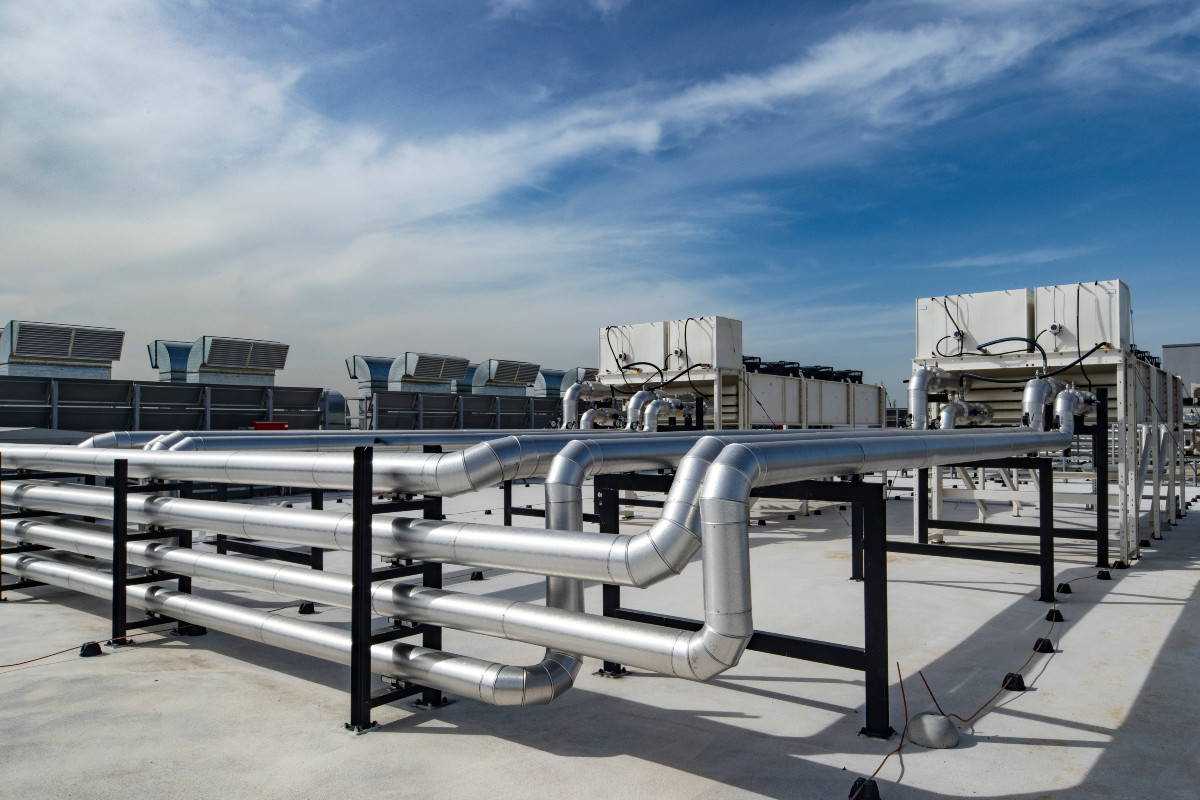
With energy demand on the rise, data centres must become models of efficiency. Today’s chillers can use significantly less power annually, freeing up capacity for compute and reducing environmental impact. They can also operate with minimal on-site water and quieter performance, helping operators conserve resources.
Operators are also adopting alternative power generation methods, such as combined heat and power systems using gas engines, gas turbines, fuel cells, and small modular reactors. Absorption chillers can reclaim waste heat from these sources and use it instead of grid electricity, with water as the refrigerant. This approach can sharply reduce electrical usage, delivering substantial cooling with comparatively low electrical input.
A sustainable path forward
The convergence of advanced technologies, leadership, and forward-thinking policy is unlocking opportunities that were previously out of reach. We’re already seeing benefits for critical industries that have adopted sustainable practices. These achievements suggest that when organisations put sustainability at the forefront, they can strengthen operations and create value for stakeholders.
As we move into the new year, the pace of change will continue. Leaders who understand that sustainability is more than a box to tick will be better positioned as sustainable practices become more central to operational strategy.