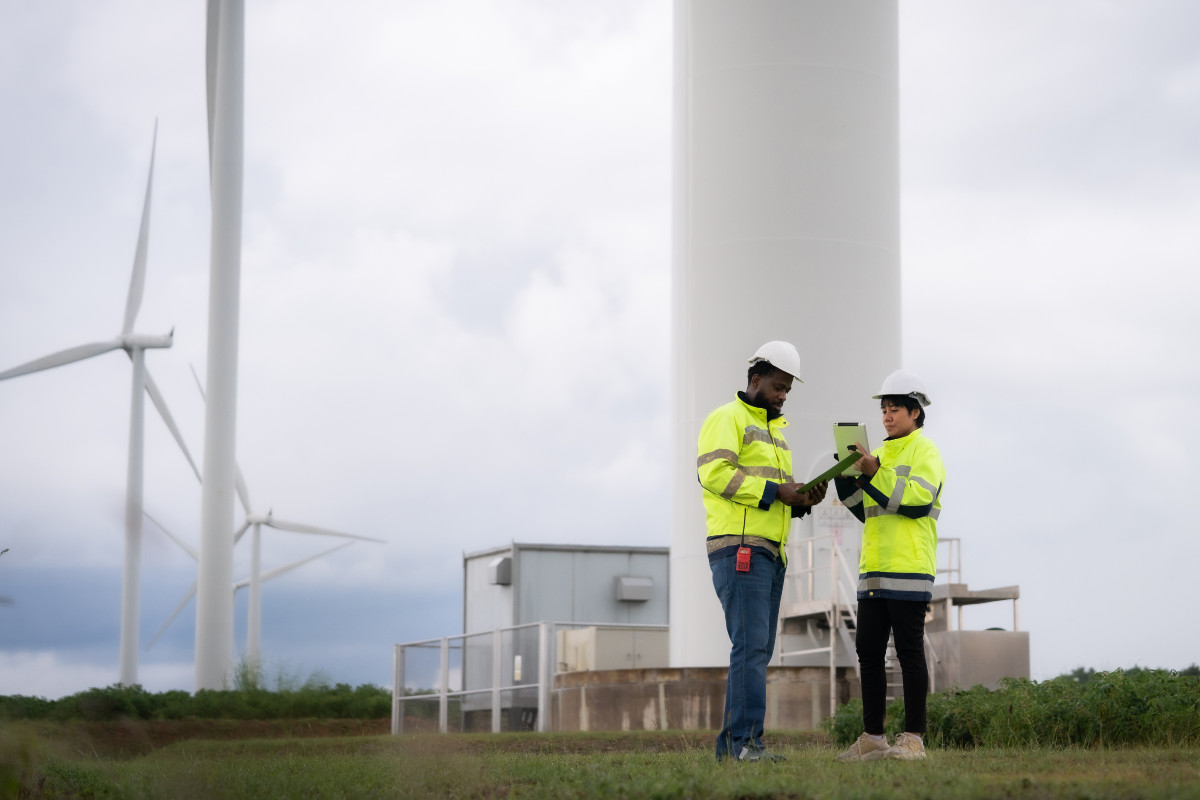
Scottish Power says it is recruiting at its fastest pace since the 1950s as electricity networks prepare for a major build-out of new lines, substations and upgrades needed for renewables, EVs and heat pumps.
That’s according to a new report from the Financial Times, which highlighted how Scottish Power expects to more than double its workforce from around 1,200 to 2,600 over the next few years to deliver its investment programme.
Speaking to the FT, Nicola Connelly, Chief Executive of Scottish Power Energy Networks, noted that, “This is the highest rate of recruitment that we’ve seen in the transmission business since probably the middle of the last century.”
Scottish Power will not be alone in ramping up its employee base, as the UK goes all-in on upgrading its aging energy infrastructure for the next generation. Ofgem has already approved an initial £10.3 billion upgrade programme for transmission assets between 2026 and 2031, with far larger investment expected to follow – with some estimating it’ll reach £70 billion.
It all comes down to how our energy mix is changing – no longer are we beholden to a few large scale energy producers, such as gas power plants, but instead, energy production is now more distributed. That’s led to a growing workload, with network owners forced to connect new wind and solar farms on a regular basis, while reinforcing existing assets, and preparing for increased electricity demand that will come from electrified transport and heating.
Workforce growth across the sector
Despite recruiting at its fastest pace since the 1950s, Scottish Power is likely to face the same challenge as many other businesses in the industry – difficulty at actually filling its roles. The skills shortage is well documented already, and yet analysis by Energy and Utility Skills Group indicates the electricity sector’s workforce could grow from around 160,000 roles to close to 290,000 by 2030, spanning generation, transmission, distribution and the wider supply chain.
Last year, Andrew Eldred, Chief Operating Officer of the Electrical Contractors Association, warned how a decline in electrical apprenticeships and a declining pool of talent could threaten the UK’s net zero ambitions.
Despite that, Scottish Power isn’t alone in looking for new blood. National Grid’s electricity transmission business, which owns the system in England and Wales, has said it plans to expand its workforce by more than 40% compared with 2024 levels, to 4,350 people by April 2026.
SSE’s transmission business, which owns the transmission networks in northern Scotland, is also expected to scale up materially. It is anticipated to grow by around 1,000 employees, from 2,500 to 3,500, over the next five years, according to people familiar with the matter.
At the distribution level, UK Power Networks – which owns and operates the lower-voltage network serving London and the South East – has also indicated it expects to expand. Andrew Pace, Director of Human Resources at UK Power Networks, told the FT that its workforce could grow by about 1,000 by 2030.