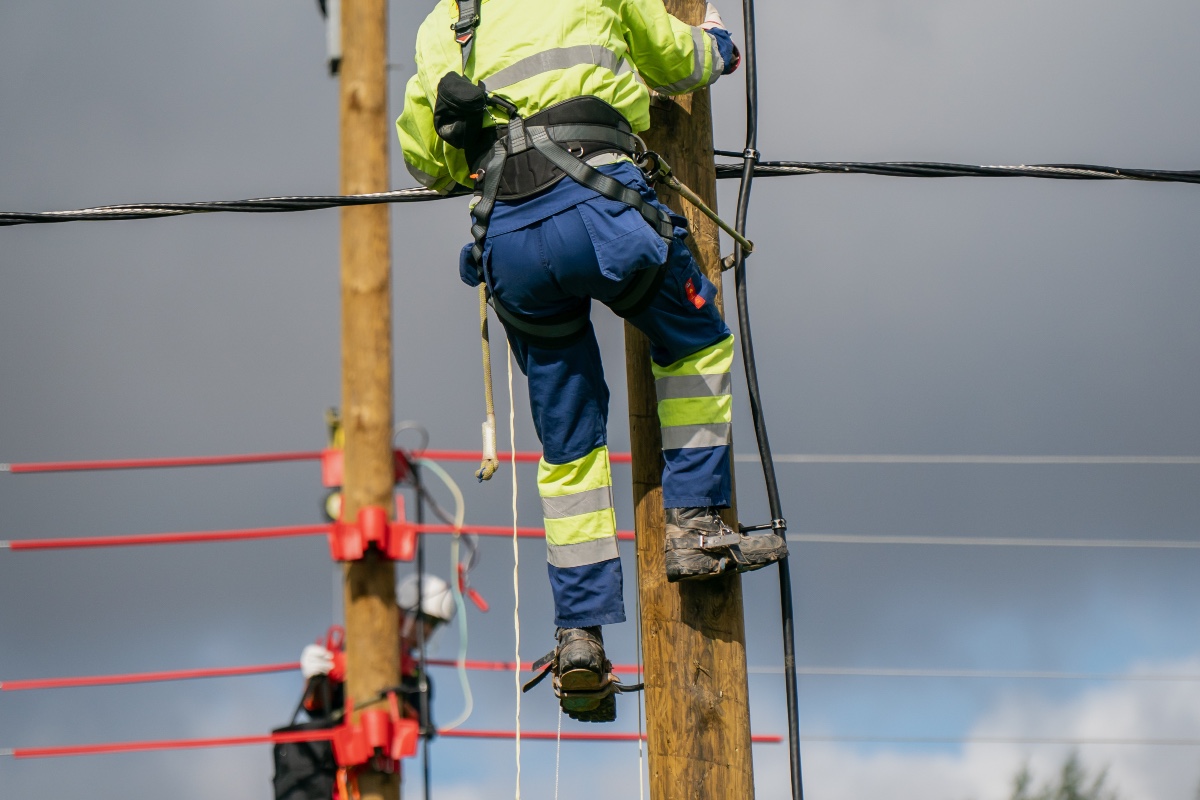
David Ward, Technical Development Manager at Alsico, shares what new sector research reveals about why protective garments go unworn – and how to turn intent into habit.
Protective clothing in electrical environments has one ultimate purpose: to prevent life-changing injury. Yet, despite strict regulations and safety progress, research shows a troubling trend – workers in live electrical environments often do not wear the protective uniforms provided, leaving garments unworn, layering inappropriately, or skipping them entirely.
This is not a marginal issue. It is a threat to workforce safety, operational resilience, and organisational reputation. And the data suggests that the problem is driven by comfort, communication, and knowledge.
Understanding the challenge
This year, we surveyed 251 professionals across the electrical sector: 150 uniform wearers and 101 individuals responsible for choosing protective uniforms. Only 40% of wearers said they always put on every component of their protective uniform. 26% admitted to wearing their own clothes instead of the protective garments issued to them, and almost one in five did so despite understanding the risks.
These figures highlight the disconnect between policy and practice. Team members are actively making decisions that compromise their own safety. To address this, we must understand why.
Two factors consistently stand out: comfort and clarity.
The comfort connection
Protective garments have historically been heavier, stiffer and less breathable than standard workwear. For a worker on a warm substation floor, wrestling a heavy coverall over layers of clothing can feel like a hindrance, especially if the perceived risk is low.
Almost half of survey respondents said they would be more inclined to wear their protective uniform if it were more comfortable. Many asked for softer fabrics, better stretch, and easier movement – fundamental qualities that influence whether a uniform is worn.
In practice, comfort is not a ‘nice-to-have’; it is a major driver of compliance. If a garment restricts movement, overheats the wearer, or takes too long to put on and remove, it becomes a disincentive for wearers to don their uniforms at all.
Advances in fabric technology have expanded the options available. Stretch fibres can now be integrated without compromising arc protection. Ergonomically placed panels remove restrictions. Lighter-weight fabrics maintain durability while reducing bulk. Yet the research suggests that many workers still receive designs that don’t reflect these innovations.
What wearers want vs selection priorities
Comfort is central for wearers, but far lower down the list for those responsible for selecting uniforms. Procurement and health and safety teams in our study overwhelmingly prioritised protective features, durability, and cost. All vital factors, but without equal emphasis on comfort and fit, these decisions can inadvertently decrease wear rates.
Only around a quarter of procurement and safety respondents said comfort had the most significant influence on their selection choices. Yet when asked, wearers placed comfort, ease of use, and mobility far above even the protective qualities of a garment.
Education: the missing link
The research also uncovered a knowledge gap that compounds the wear-rate issue. Many wearers said they had not been clearly shown how to wear the uniform properly, how to care for it, or what specific risks it mitigates. This was more common among newer entrants to the sector, suggesting that onboarding processes are not consistently communicating essential PPE guidance.
Education is not simply about explaining rules – it’s about building understanding. When wearers understand why clothing is designed this way and how non-compliance amplifies risk, conversations become more constructive.
Bridging the gap
To improve wear rates, workplaces must focus on three key priorities:
- Wearer-centric design
Protective clothing must account for human factors. Fit, mobility, comfort, and ease of getting uniforms on and off are critical. Stretch panels, breathable fabrics, and garments tailored to diverse body shapes are essential components of safety. - Clear, accessible education
Demonstrations, toolbox talks, visual reminders, and structured onboarding can increase understanding of garment function and limitations. Workers must know not only what to wear, but why each component matters. - Continuous dialogue between wearers and selectors
Regular feedback loops e.g. informal conversations, surveys, or structured reviews, give uniform selectors insight. When workers feel heard and see their feedback reflected in decisions, wear rates improve.
Towards a safer, more engaged future
Improving wear rates is not about enforcing stricter rules. It is about creating conditions where the protective uniform is the obvious choice: comfortable, functional and trusted.
Uniforms designed with the worker in mind, supported by clear communication and informed procurement decisions, can help transform compliance from a challenge into a natural habit.
By listening to wearers, empowering those in charge of selection, and leveraging protective technology, workplaces can build an environment where protective clothing is worn properly, consistently, and confidently – improving safety in a wide range of electrical environments.