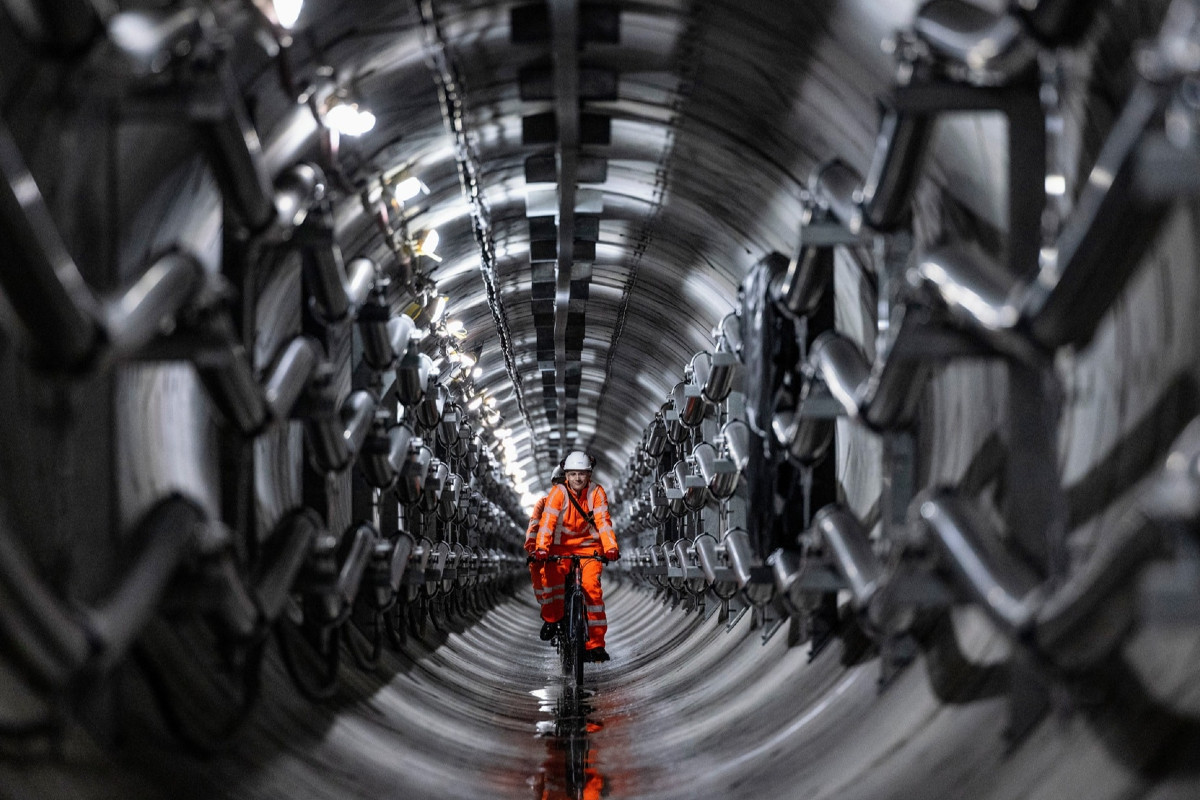
National Grid has energised a new transmission circuit beneath South London, bringing a key section of its London Power Tunnels 2 (LPT2) upgrade into service.
The newly live circuit forms one side of a double connection between National Grid’s New Cross substation in Southwark and its Hurst substation in Bexley. The route runs for 18 km through tunnels up to 50 metres deep, with the second circuit expected to replace the remaining existing cable when it goes live in the new year.
National Grid said the new link replaces one of two buried cables that have served the capital since the 1960s. Those original links, at almost 22 km, have historically been the longest AC transmission cables on the England and Wales network – although that record is set to move to the Elstree–St John’s Wood cable circuit in North London.
The New Cross–Hurst circuit supplies power onwards into UK Power Networks’ distribution network via National Grid’s substations at New Cross and Hurst. National Grid said the newly energised circuit serves around 340,000 properties in South East London.
The milestone follows earlier energisations on the eastern end of the LPT2 route. National Grid said the first two LPT2 circuits were energised between Hurst and Crayford in August 2024 and March 2025, along a 2.5 km section forming the project’s most easterly stretch.
In total, LPT2 spans 32.5 km across seven South London boroughs, from Wimbledon to Hurst. National Grid said the project began in 2019 and is being delivered in partnership with HOCHTIEF-MURPHY Joint Venture (HMJV), Taihan, Balfour Beatty and Linxon.
While the immediate change is a new circuit entering service, the broader aim is familiar across much of the UK: reinforcing transmission networks as demand rises, assets age, and electrification adds pressure to infrastructure that was not designed for today’s loads.
Mete Coban, Deputy Mayor of London for Energy and Environment, noted, “It’s fantastic to see electricity flowing through a new part of the London Power Tunnels. This circuit ensures homes, schools and local communities in South London are one step closer to having the power they need for the future, as we continue building a better London for everyone.”
Joe Senior, Project Director at National Grid Electricity Transmission, added, “Switching on this circuit on a new part of our London Power Tunnels 2 project is a significant achievement for our engineering and delivery teams. This milestone in the project marks another step in reinforcing London’s electricity network and keeping the city connected to safe and reliable power into the future.”
National Grid describes LPT2 as the second phase of a wider programme to reinforce the capital’s electricity network in anticipation of growing demand. The company said the project follows the completion in 2018 of the first London Power Tunnels phase – a seven-year, £1 billion programme that constructed 32 km of tunnels and two new substations to “rewire” parts of North London.
For LPT2, National Grid said the works include 200 km of high-voltage cable installed within the tunnels, at an average depth of around 30 metres, with the route passing beneath rivers and rail lines and crossing under parts of the Underground and the DLR. The company also said the programme has involved 5 million working hours from more than 3,000 people since 2019.
With the first New Cross–Hurst circuit now live, attention will turn to energising the second circuit and retiring the remaining legacy cable – completing the replacement of an asset pair that has quietly done its job for more than half a century.