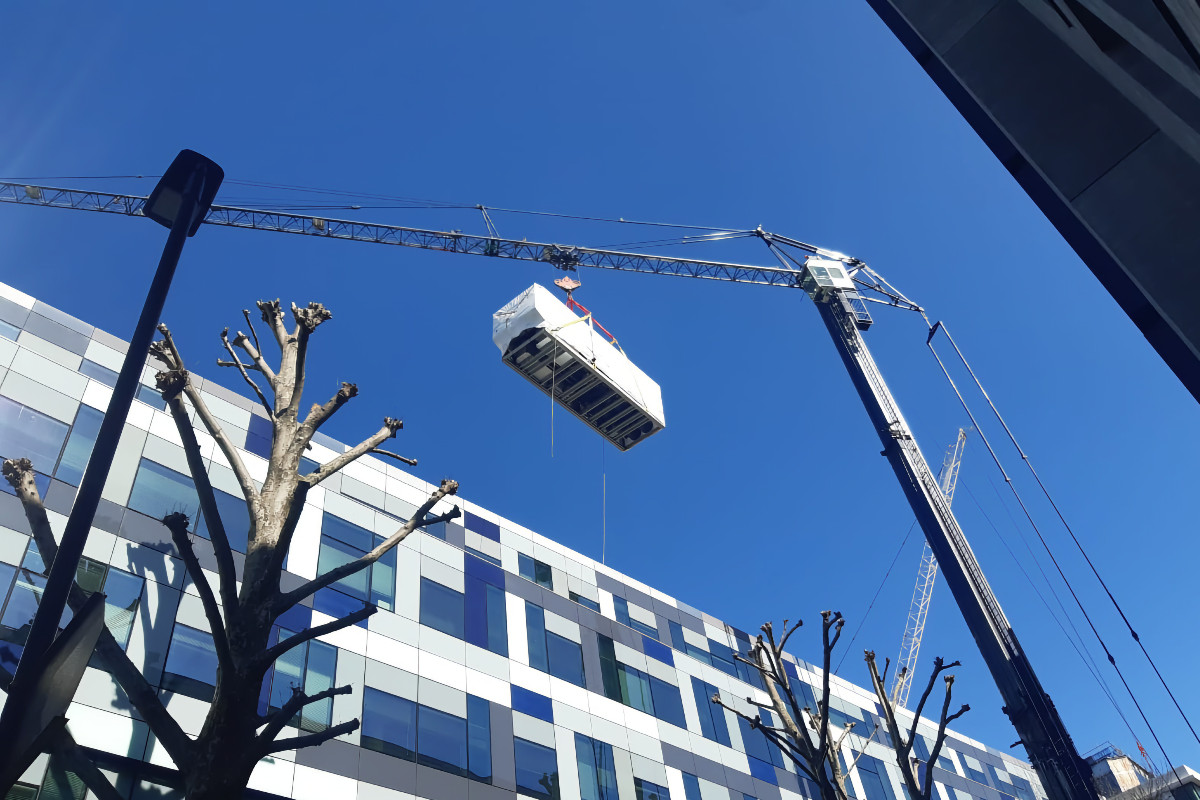
Dalkia has completed a £3.1 million decarbonisation of the electrical and mechanical plant at Arup’s London headquarters, 8 Fitzroy Street, shifting the building’s core services away from gas and onto high-efficiency electric heat pumps while the office remained fully occupied.
The project, delivered with Arup acting as designer and Dalkia as Principal Contractor, could be a template for how large commercial buildings can retrofit low-carbon heating and cooling without taking space out of use – a key concern for facilities managers, building services engineers and electrical contractors working in constrained city-centre offices.
The scheme is a major milestone in Arup’s Net Zero Plan, which commits the consultancy to becoming a science-based net zero organisation by 2040 across its global estate. At 8 Fitzroy Street, that has meant removing two existing gas boilers and two chillers and replacing them with air-source heat pumps using R513A refrigerant. According to the partners, the plant now delivers heating and cooling with efficiencies between 300 and 400%, compared with around 85% for the previous gas boiler plant, while R513A’s global warming potential is 56% lower than the R134a refrigerant it replaces.
Domestic hot water generation has also been electrified. The former gas-fired water heaters have been swapped for four CO2-based heat pumps, further cutting direct fossil fuel use on site. In total, the upgrades are expected to reduce annual carbon emissions by approximately 250 tonnes of CO2 – equivalent to the yearly emissions of more than 150 average UK homes – contributing directly to Arup’s science-based emissions reduction targets, which were validated by the Science Based Targets initiative (SBTi).
Working in a fully occupied HQ
Because 8 Fitzroy Street remained in use throughout, the project had to be sequenced around day-to-day office activity, with careful planning of shutdowns and switchover periods to avoid disruption to power and building services.
Dalkia and Arup adopted out-of-hours working, used prefabricated pipework and coordinated trades to minimise time on site. For facilities and electrical teams, the scheme underlines the practical challenges of electrifying heat in a live commercial environment – and the level of planning needed to maintain resilience and comfort while the plant is replaced.
Glyn Fells, at Dalkia, noted, “This project shows what can be achieved when design innovation and expert engineering delivery come together. 8 Fitzroy Street is a powerful example of practical decarbonisation in action, reducing operational carbon while maintaining comfort and performance in a fully occupied building.”
Stephanie Welch, London Office Leader & Head of WFM at Arup, added, “8 Fitzroy Street is more than just Arup’s headquarters – it’s a reflection of our Net Zero Plan in action. By decarbonising our own estate, we’re demonstrating our commitment to science-based targets and leading by example in the transition to a low-carbon future. This retrofit is a tangible step toward our goal of becoming a net zero organisation by 2040, by applying our own sustainability principles to the buildings we design, own and occupy.”
A template for retrofitting all-electric plant
The 8 Fitzroy Street decarbonisation scheme is another sign that large commercial offices are beginning to move away from fossil fuel plant in favour of high-efficiency electric alternatives, particularly where owners have formal net zero commitments.
The combination of air-source and CO2-based heat pumps, lower global warming potential refrigerants and a retrofit methodology compatible with an occupied site offers a practical route to cutting operational carbon in similar buildings. As more clients look to decarbonise existing estates rather than rebuild from scratch, projects like this are likely to become a growing part of the workload for electrical contractors, consultants and FM teams working in the UK’s commercial property stock.